
- Travel
- News & Advice
The Man Who Pays His Way: Passengers waiting in airport queues aren’t the only ones unhappy with the EU entry-exit system
Simon Calder Travel correspondent Sunday 25 January 2026 16:57 GMT- Bookmark
- CommentsGo to comments
Bookmark popover
Removed from bookmarks
Close popover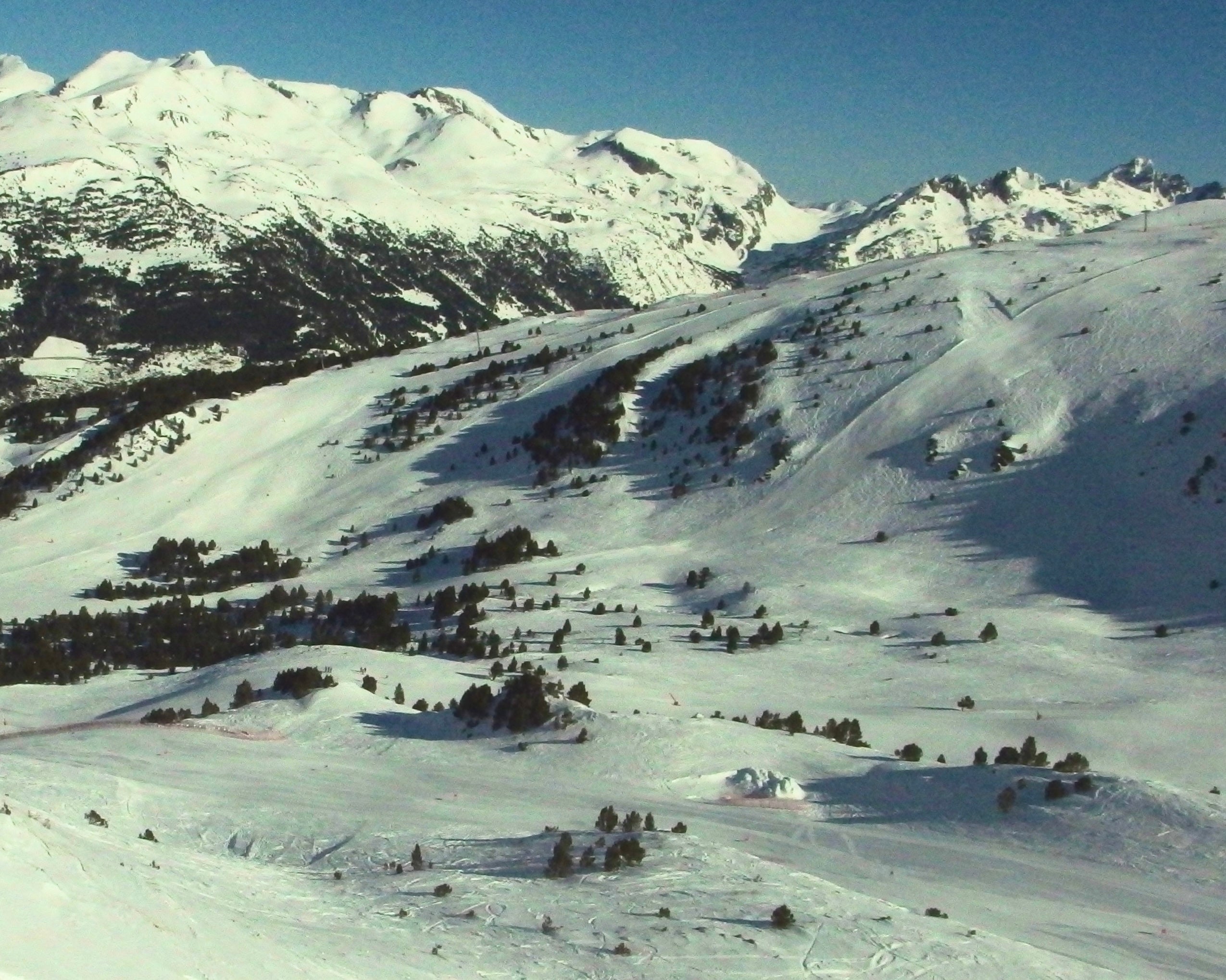 Andorran escape: Over the hills and faraway (Simon Calder)
Sign up to Simon Calder’s free travel email for expert advice and money-saving discounts
Get Simon Calder’s Travel email
Get Simon Calder’s Travel email
Email*SIGN UPI would like to be emailed about offers, events and updates from The Independent. Read our Privacy notice
Crossing into the Schengen area without being spotted is easy, at least if you have decent footwear and provisions – and begin in Andorra. The Pyrenean principality, wedged between France and Spain, has mountain passes leading into both its neighbouring nations.
In theory – and please don’t take this as any kind of advice – a miscreant whose time in the European Union is rapidly approaching the “90 days in any 180 days” limit could exit France or Spain into Andorra at either of the official road crossing points, collecting a stamp on their way out. They could then scamper over the hills and faraway, returning to the Schengen area without officially checking in.
Within a further 90 days – the maximum allowed by the high-altitude micro-nation) – they might return to Andorra the way they came. There would be no record of them re-entering the tiny territory. They could hop on a bus to the requisite frontier and check back into Schengen.
A sharp-eyed French or Spanish border guard might look askance at their travel record according to the passport and enquire: “How, pray, have you spent almost the last three months in such a pocket-sized country? But probably they would simply be stamped into the Schengen area to resume their nefarious activities.
Anecdotally, it appears that there are many British people working in Spain, particularly in resorts along the Costas. The present analogue system of checking the length of stay of each “third-country national” relies on officials examining the stamps in the passport to calculate the length of stay. In my experience of dozens of Spanish border crossings, no officer has ever shown the faintest interest in assessing my comings, goings and potential overstayings.
One aim of the impending EU entry-exit system is to prevent people from staying longer than the law allows. The digital border scheme records your entries and exits on a central database, which can instantly calculate if you have overstayed your welcome. Your fingerprints and facial biometrics are demanded to prevent any funny business – for example, by people with a pair of non-EU passports exiting on one document and immediately returning on the other.
The Andorran two-step could endure for those with a head for heights. But it would not work for, say, anyone at the wheel of a big truck. Which is why, on Monday, all frontiers between the Schengen area and the Balkan nations of Serbia, Bosnia, Montenegro and North Macedonia will be blockaded by lorry drivers. The truckers are unhappy about the potential effect of the EES on their livelihoods.
You might wonder: how can that be? Surely if you drive lorries between Belgrade and Budapest, about half the journey is spent in the EU and half of it outside. Add in days off, and no one could get close to the 90-day limit. So what’s the problem?
Well, it is said that truckers from those Balkan nations do considerably more work in the EU than simply shuttling back and forth from Sarajevo or Skopje. A well-placed European source says that often they will spend weeks at a time driving within the European Union.
The 90/180-day rule is not scrupulously enforced by hard-pressed frontier officials. Digital data, though, cannot be ignored. As a result, Monday will see freight movements halted by a group of workers protesting against EU legislation that is only a matter of weeks from being fully enforced. By 9 April, all frontiers are required to be running the EES for every third-country national.
The Foreign Office warns travellers in the region on Monday: “If you are planning cross-border travel, check local media before travelling and plan ahead to avoid disruption to your journey.” But the Serbian Association of International Road Hauliers helpfully explains that lorries “will be allowed to pass the convoy of vehicles at the protest” if their cargo comprises “medicaments, live animals, ammunition and explosives”. The weapons always get through.
The branch of the Brussels civil service responsible for delivering EES insists the scheme is taking root as expected and is on schedule. The drivers’ blockade on its own will not halt the roll-out. But it is an unexpected extra dimension to the challenge of implementation – as seen at multiple European airports, with waits of up to three hours attributed to the new biometric system.
The length of the queues you face this summer could be in the hands of burly Balkan truckers – either because their border blockades spread further, or because their action this week proves the tipping point in pressing “pause” on the entry-exit system.
Simon Calder, also known as The Man Who Pays His Way, has been writing about travel for The Independent since 1994. In his weekly opinion column, he explores a key travel issue – and what it means for you.
Read more: All you need to know about the EES and the Etias permit
More about
European UnionSchengenAndorraForeign OfficeThe Man Who Pays His WayJoin our commenting forum
Join thought-provoking conversations, follow other Independent readers and see their replies
Comments